

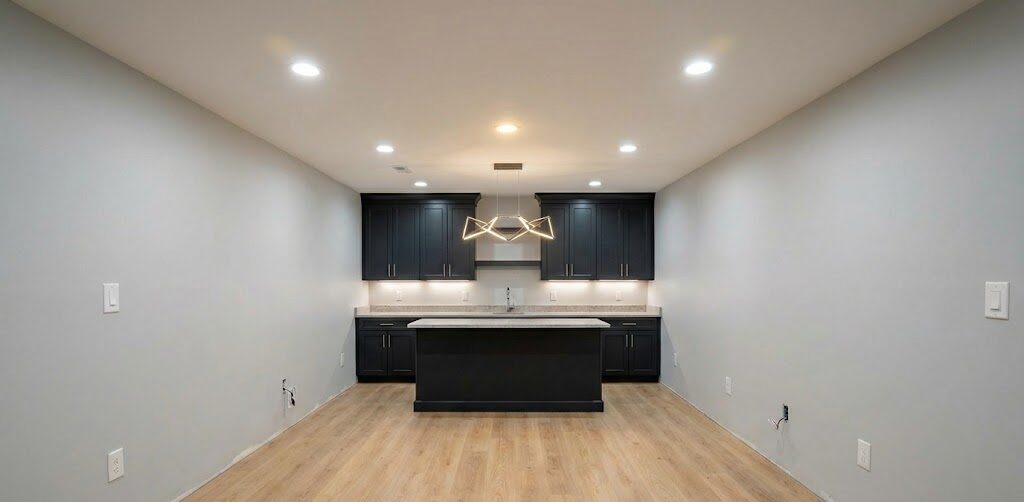
Basement Lighting & Electrical That Brightens Every Space
Basements have a reputation for feeling dark, unfinished, or disconnected from the rest of the home—not because of the square footage, but because of poor lighting and outdated electrical layouts.
Fortress Builders helps homeowners in Davis and Weber Counties transform basements into bright, comfortable living spaces by designing lighting and electrical systems that support how the space will actually be used—now and in the future.
Why lighting and electrical planning matters more in basements
Basements are different from main floors. They typically have:
limited natural light
lower ceiling heights
structural elements that affect fixture placement
evolving uses over time (family room → office → guest space)
When lighting and electrical are treated as afterthoughts, basements often end up with:
uneven lighting and dark corners
too few outlets in the wrong locations
visible cords and power strips
limited flexibility for future layout changes
spaces that still feel “below grade” even after finishing
The goal isn’t just to make the basement brighter—it’s to make it feel intentional, flexible, and comfortable.
What Fortress Builders includes in basement lighting & electrical design
Lighting and electrical are planned alongside layout, finishes, and moisture strategy so the space works as a whole.
Layered lighting by zone
Instead of one flat lighting plan, we design lighting around how the basement will function.
This often includes:
ambient lighting for overall brightness
task lighting for offices, bars, or activity zones
accent lighting to add warmth and depth
By layering light, basements feel taller, wider, and more inviting.
Recessed lighting planned for ceiling conditions
Recessed lighting is common in basements—but placement matters.
We plan around:
ceiling height and obstructions
spacing that avoids “runway” or spotlight effects
clean alignment with walls and key features
This keeps lighting balanced instead of harsh or uneven.
Outlet placement that matches real use
Basements are often the most flexible spaces in the home—and the most frustrating when outlets are missing.
We plan outlet locations based on:
seating and TV placement
desks and work-from-home zones
exercise equipment or hobby areas
charging and convenience needs
No guessing. No extension cords across the room.
Media, data, and low-voltage planning
If your basement includes a TV area, home theater, or office, we coordinate wiring early.
This can include:
TV and media power placement
data and low-voltage routing
future-ready conduit where appropriate
Planning this early keeps walls clean and avoids retrofits later.
Egress and code-aware lighting
Basements often have code-specific requirements, especially around egress windows, stairways, and safety lighting.
We coordinate lighting that:
meets code requirements
supports safe movement
integrates cleanly into the finished design
Flexibility for future changes
Basements evolve. A kids’ playroom today might be a teen hangout or guest suite later.
We plan electrical layouts that:
allow furniture and layout changes
support future upgrades
don’t lock you into one rigid use
The basement lighting decisions that matter most
You don’t need to overdesign a basement—but a few key decisions make a big difference.
1) How the space will be used (now and later)
Lighting needs change based on function.
We help clarify:
family room vs media room needs
office or desk zones
fitness or hobby areas
guest or multi-use layouts
2) Where shadows and dark corners typically form
Basements feel smaller when corners are dark.
We plan lighting to:
reduce shadow pockets
balance light across the room
improve comfort at night
3) Switch placement and control logic
Basements often feel awkward when switches are scattered or unintuitive.
We design control layouts so:
zones make sense
frequently used lights are easy to access
dimmers are used where they add comfort—not everywhere by default
4) Power needs beyond “just enough”
Basements often host TVs, game consoles, exercise equipment, and chargers.
We plan electrical capacity and outlet placement so the space works without workarounds.
How Fortress Builders plans and executes basement lighting & electrical
Fortress Builders approaches basement finishing as a coordinated system—lighting and electrical included.
Step 1: Design consult and usage planning
We start with:
how you want to use the basement
what frustrates you about your current basement lighting
future flexibility goals
budget and scope priorities
Step 2: Layout + lighting alignment
We coordinate lighting with:
wall locations and ceiling conditions
moisture management strategy
finishes and color palette
stairways and egress areas
Step 3: Electrical rough-in with clarity
Before walls are closed, we confirm:
outlet locations
switch placement
lighting zones
media and data wiring
This is where most basement regrets are avoided.
Step 4: Trim-out and comfort check
After installation, we verify:
lighting balance across the space
switch logic and usability
outlet accessibility
overall feel—bright, comfortable, and finished
Who this is for
Basement lighting and electrical upgrades are ideal if you:
want your basement to feel like a true living space
are tired of dark corners and limited outlets
plan to use the basement for multiple purposes
want flexibility as your family’s needs change
value planning and coordination over quick fixes
If you’re searching for basement lighting design in Utah or basement electrical upgrades in Davis County, this level of planning is what makes the difference.
Related basement finishing pages
Lighting and electrical work best when coordinated with the rest of the basement system:
Basement Finishing (Hub Page) – overall planning and layout
Moisture Management – protecting comfort and finishes below grade
Basements Portfolio – see finished basements and lighting approaches
Basement lighting & electrical FAQs
How many lights does a basement need?
It depends on ceiling height, layout, and use. We focus on balanced coverage rather than a specific fixture count.
Can recessed lighting work in low ceilings?
Yes—when planned carefully. Fixture type, spacing, and placement matter more than quantity.
Should I plan for future TV or office use?
If there’s any chance you’ll want it later, planning power and wiring now is far easier (and cleaner) than adding it later.
Does lighting affect how “finished” a basement feels?
Absolutely. Lighting is one of the biggest factors in whether a basement feels welcoming or still feels unfinished.
Ready to brighten your basement the right way?
If you want a basement that feels open, comfortable, and flexible—without cords, dark corners, or awkward layouts—the next step is a design consult.
Tell us how you want to use your basement today and how you might want it to evolve. We’ll help you plan lighting and electrical systems that make the space brighter, more functional, and built to last.
Ready to elevate your kitchen?
Start with a design consult and a clear plan.